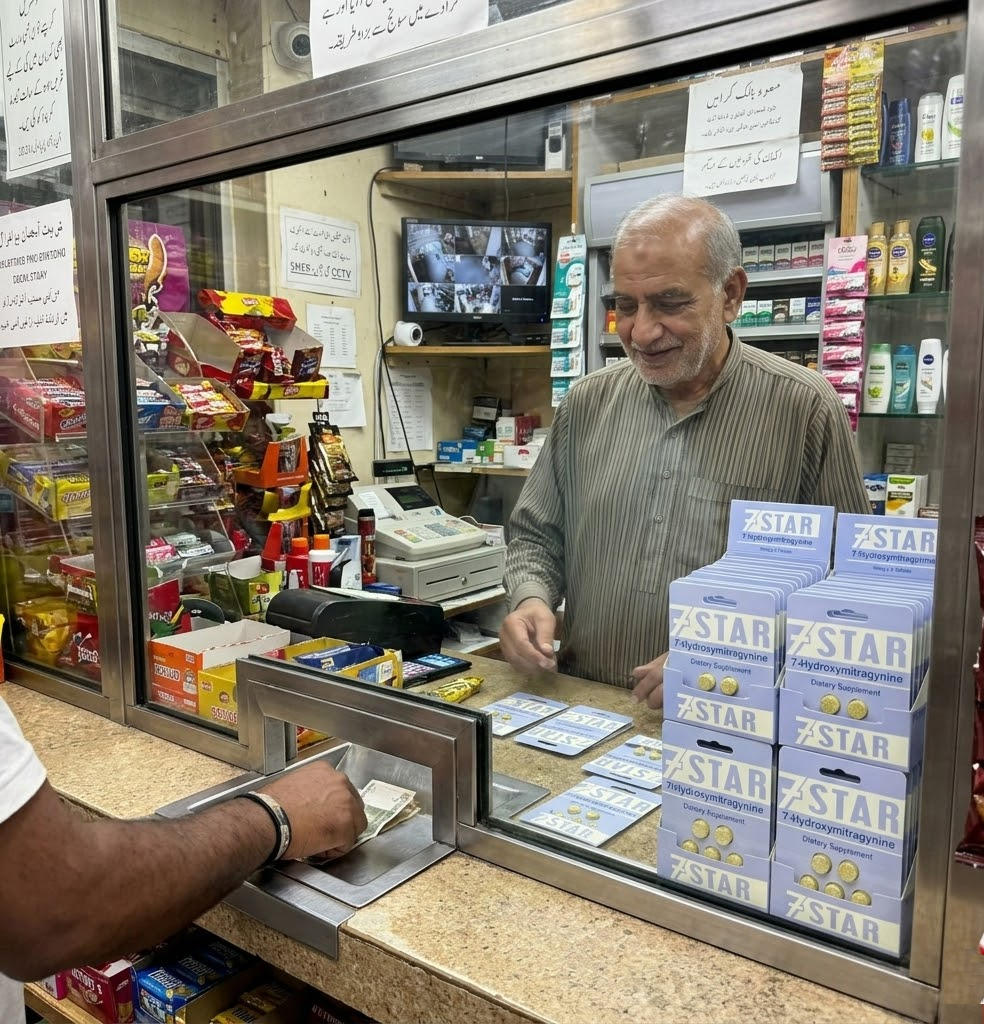
 Powerful opioids are currently lining the shelves of gas stations and smoke shops across Houston’s suburbs, sitting openly beside candy and condoms.
7-hydroxymitragynine (7-OH), an isolated alkaloid derived from the kratom plant, is sold legally throughout Harris County despite possessing a binding affinity for the mu-opioid receptor that experts say is 10 times stronger than that of morphine. The presence of this substance in the retail market creates a stark paradox: while the state maintains a rigid prohibition on most opioids, it allows the sale of 7-OH, offering a glimpse into what a regulated legal narcotic market might look like.
The current retail landscape of 7-OH has sparked a debate among policymakers and public health experts. For proponents of drug policy reform, this paradigm lays bare the systemic failures of the War on Drugs. They posit that the comprehensive legalization and stringent regulation of narcotics constitute a far more ethical and pragmatic public health strategy than the prevailing model of absolute prohibition. By relying on a punitive framework, prohibitionist policies have decimated communities, fostered expansive criminal subcultures and systematically eroded the rule of law, thereby paradoxically fortifying the very illicit syndicates they were designed to dismantle.
The Economics of the Gray Market
Retailers of 7-OH have adopted price-gouging strategies that mimic the economics of illicit narcotics. A three-pack of tablets, such as those produced by Houston-based 7star, often retails for approximately $35.
“We mark up the 7-OH tablets by over 300 percent because we know the demand is inelastic,” said an employee at an independent convenience store in Kingwood. “Customers come in shaking, and they will pay whatever price I scan. If the state bans it next month, we make our profit now. It is just business.”
Critics of the current system point out that this “gray market” creates a tiered form of access. These products are often absent from lower-income neighborhoods, where consumers may turn to cheaper, illicit alternatives like fentanyl. By allowing a gray market to thrive, critics argue that the state effectively enables access for those with disposable income while criminalizing similar chemical dependencies in marginalized communities.
Moving Beyond Prohibition
Proponents of legalization argue that the criminality associated with narcotics is often a direct result of prohibitionist policies rather than the substances themselves. Under the current model, black-market economics—or in this case, unchecked gray-market pricing—can drive individuals to financial instability.
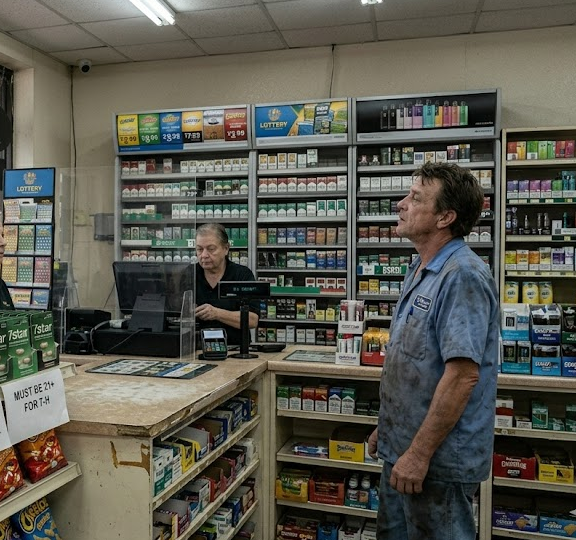
“I credit 7stars with getting me off of fentanyl but they keep jacking up the prices and now I’m spending nearly my entire paycheck at a fucking gas station on Northpark to stockpile before the government bans them,” shares an anonymous Houston consumer. “The financial stress ruins my life, but the fear of going into withdrawal with no alternative is worse. I don’t know any dealers anymore. It’s the not-knowing … I’m now spending the same amount of money as I was on fentanyl a year ago, but at least I can’t go to jail or overdose on 7stars.”
While Texas lawmakers attempted to address botanical access with the 2023 Texas Kratom Consumer Health and Safety Protection Act, many reformers argue that a more comprehensive approach is necessary. They contend that full legalization would allow the state to impose strict manufacturing standards, age restrictions, and quality controls similar to those governing the alcohol industry.
The Question of Public Safety
A central argument against drug legalization has long been the fear that substances inherently compel individuals to commit violent crimes. However, some researchers note that opioids generally do not produce the same psychopharmacological effects—such as erratic aggression—associated with other legally sanctioned substances like alcohol.
As Houston continues to serve as a hub for the distribution of kratom extracts, the debate remains centered on whether the current regulatory vacuum is sustainable. Distributors operating out of wholesale warehouses in areas like Harwin Drive acknowledge that the current system is built on market volatility.
“The margins on 7star and other 7-OH isolates are unprecedented,” said a local distributor. “We move thousands of units a week to retailers across Harris County. We operate within the letter of the law, but everyone knows the regulatory clock is ticking. We are capitalizing on the vacuum while it lasts.”
As the legislative future of 7-OH remains uncertain, the situation serves as a test case for whether a regulated, legal market could mitigate the harms of addiction or if it risks deepening the public health challenges already facing the region.
“If they ban this stuff, I will probably buy shit off the street again. Risk my life. It’s my reality.”